Showing posts with label H. The Industry. Show all posts

Thursday, 26 May 2016

Developing Technologies

Television has come very far over time since the first TV was invented. Gradually TV has developed further and there are all sorts of different TV's and TV features now. The first major improvement to TV was being able to watch it in colour but since then there have been many step's up such as 3D television, satellite televison, cable television, interactive television, high definition television, streaming media and internet television/on-demand viewing, digitial recorders and pay per view.

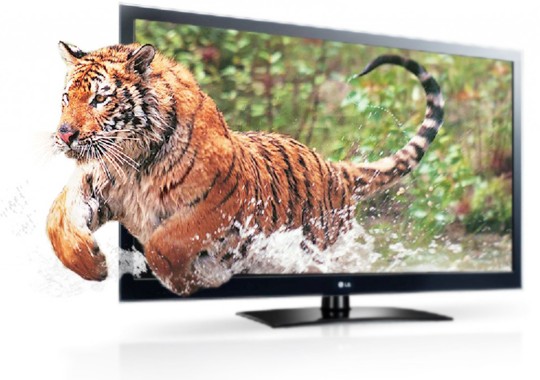
3DTV is watching television in 3 dimensions so certain things look like they're coming out of the screen and it's made to look more realistic for the viewers. It is done by a scene being filmed with two cameras, one focusing on an image for the left eye, the other for the right, then they are merged together and it looks like a blurry image but when it is watched through 3D glasses, it creates a 3D image. Alternatively, you can have the light source split the images directionally into the viewer's eyes, this means the viewer doesn't require glasses. I think 3DTV is good because it does enhance the viewing experience and makes you feel more involved, but I find that having to wear glasses throughout the film quite annoying and sometimes it can hurt your eyes. I also don't find it majorly different to just watching a film on a cinema screen because there's not always a lot of the film that uses 3D and comes out of the screen.

Satellite TV is television received through a satellite dish, things like Sky and Virgin are both forms of satellite TV which must be paid for and a satellite dish must be attached to your house in order to receive signal from the corresponding satellite in space. It's done to offer a wider range of programmes from all over the world to viewers and offer them channels that would be hard to get otherwise. I think satellite TV is very good because you get access to so many more channels than you would normally be able to and it's nice and easy to get and usually quite cheap. It's also improving nowadays and gives you the ability to do things such as pause and rewind live TV and the ability to record your favourite programmes. The only flaw is interferences due to weather and things like that, but they're quite uncommon.


Interactive TV is a feature that allows viewers to interact with the television whilst watching it. It can allow viewers to do things such as respond to a competition, vote for the favourite act on a talent show, access internet based servicesm, view things that aren't on standard channels and more. The red button is a service on some channels where some content can be accessed by pressing the red button on your remote. I think this is good because it gets the audience more involved with certain programmes and it's one thing about TV that could be developed further and a lot more could come of this.

High Definition TV (HDTV) is video that is of a much resolution and looks much better than standard definition. HDTV has one or two million pixels per frame, roughly five times more than SD. Early HDTV broadcasting used analog techniques, but today HDTV is digitally broadcast using video compression. I think HDTV looks good particularly on large TV's but sometimes it doesn't look that much better than SD and the price for HDTV isn't always worth the difference. It also causes some TV companies to make their standard definition channels of worse quality to make people want to pay for the HD channels.

Cable TV is a way of receiving television through radio frequency signals transmitted to televisions through coaxial cables or digital light pulses through fixed optical fibers on the house. FM radio programming, high-speed internet, telephony, and similar non-television services can also be accessed through cable TV. The major difference is the change of radio frequency signals used and optical connections to the subscriber property. I think cable TV is good but is quite outdated in some countries because of things like Satellite TV, it is good for getting less interferences however and is also useful in countries where satellite signal is difficult to get.

Analogue Television is the analog transmission that involves the broadcasting of encoded analog audio and analog video signal one in which the message conveyed by the broadcast signal is a function of deliberate variations in the amplitude and/or frequency of the signal. All broadcast television systems preceding digital transmission of digital television (DTV) were systems utilizing analog signals. Analog television may be wireless or can require copper wire used by cable converters.


Digital Televison is the transmission of audio and video by digital signals, in contrast to the analog signals used by analog TV. Many countries have replacing broadcast analog television with digital television to allow other uses of the television radio spectrum.

Streaming Media and Internet Television/on-demand viewing. Streaming media is watching videos on an internet website that are provided by someone else who is streaming it on a website, things such as live football matches that are not on TV are usually streamed or live events. It could also mean the person streaming is recording footage and streaming it as it's being recorded. Internet Television/on-demand viewing is showing TV programmes online on a website and offers a wide range of programmes that have already been aired on TV. There are official on demand websites such as 4oD, BBC iPlayer and ITV player and also unofficial on demand websites which don't show content specific to certain channels. I think this is very good because if you've missed a programme, you can just watch it again in an internet browser and usually the programmes are available for a long time and of course if for some reason you can't watch something that's live, you can just stream it even if it's not as good as watching the actual thing on TV. It can sometimes lag or run slightly slow but it is still a very good way of showing TV content.

Digital Recorders are similar to VCR's in the way that you can record what's on TV, but it has been made much easier by things such as the Sky + box where you can easily record live programmes and save them on your box to watch at any time as opposed to having to fast forward through your video to find what you're looking for. You can also use it record an entire series simply by selecting one episode and setting it to record the series. Also it can be used to pause and rewind live TV and record specific parts of programmes. I think digital recorders are incredibly good because you can record what you want  and watch it at any point and it's easy to find and much more efficient than VCR recorders. The only flaws are how much space you have, usually they provide you with a good amount of space but it depends how much you want to record.

Pay Per View is a TV service which allows viewers to buy certain events to watch via private telecast. The broadcaster shows the event at the same time to everyone ordering it instead of viewers being able to see it whenever they like like video on demand. Sky Box Office is an example of this, viewers can purchase films to watch when they're on, films that are too new to be shown on Sky Movies but are no longer in the cinema, also sporting events such as boxing matches are usually purchase only events. I think this is good because a lot of people will want to see things like big sporting events and will be prepared to pay for them, but with things like movies some people may not want to pay to watch it for a one off, but it is still quite an effective way of making money.

Film Based: CGI (computer generated imagery) is used in some films and is basically computer animation, some films are made entirely of CGI and contain a world and all characters made by CGI, films such as Shrek, Toy Story and Avatar. For example, in Toy Story, Buzz and Woody are both made from CGI and animated and everything else in that film is made from CGI. It can be used in films with humans though, an actor acts out all the movements of the character and then the CGI is added in afterwards. It all used mainly to create scenes that would otherwise be impossible to make, or just to make a film look better and can also be cheaper to make films if they're made entirely out of CGI. I think CGI is good because it makes some scenes that would be impossible, possible and I think it does enhance the viewing experience because they quality is better and in general it just looks better. I think some films have relied too much on the CGI used and not put enough effort into the actual story however, but films like Toy Story and Shrek are an example of films that have used good CGI and a good story. Overall it's more positive than it is negative.

Overall you can see that TV has changed and improved a lot over the years and there are so many different types now. I don't see much more that they could do with TV but they've got plenty so far so I think there will be more in the future.


references:
https://en.wikipedia.org/wiki/3D_television
https://en.wikipedia.org/wiki/Pay-per-view
https://en.wikipedia.org/wiki/CGI

Careers

Task One:


  • Good communication skills - Works well as a team; can listen to other people's ideas and incorporate them as appropriate
  • Good with IT software - Photoshop and Premier Pro picked up quite easily from college.
  • Good leadership skills - Listen to others ideas, make sure everyone is busy.


  • Task Two:

    Part-time:

    A part time job is very useful for students who have college and school as well as they can earn money whilst still in education. The hours will be less than full time jobs.

    Full-time:

    A job that takes up most hours of the week and leaves no time for education.

    GCSE:

    General Certificate of Secondary Education: exams that are taken at the end of high school.

    AS/A Level:

    Qualifications that are gained at sixth form/college, this is the step of education after high school and before Uni or a job/apprenticeship.

    Level 1, Level 2, Level 3:

    Level 1 is correspondent to one GCSE grade at D-G grade. Level 2 is equivalent to one GCSE grade at A*-C. Level 3 is equivalent to one to five A Levels at A*-C

    Pass, Merit and Distinction (BTEC National):

    The grades of the BTEC National courses.


    • DDD - AAA
    • DDM - AAC
    • DMM - ACC
    • MMM - CCC
    • MMP - CCE
    • MPP - CEE
    • PPP - EEE

    Vocational:

    Courses that are vocational are directly related to occupation or employment.

    Bachelor's Degree, Master's Degree:

    These are the levels of degrees given at University. Bachelor is the first level and is given after 3 or so years of study. Master's degrees are the second level and are given after varying amounts depending on university.


    Task Three:

    Film Editor:

    As a film or video editor, you'll be responsible for assembling recorded raw material into a finished product that's suitable for broadcasting. The material may include camera footage, dialogue, sound effects, graphics and special effects.

    Runner:

    Runners act as general assistants, working under the direction of the producer and other production staff, to undertake whatever basic tasks are required to ensure the smooth running of the production process.


    Task four:

    National Press:

    Certain national newspapers like the Guardian are required to have a section for job advertisements as a method of recruitment.

    Trade Press: 

    Trade press means that there are specialised magazines out there with job advertisements pertaining to a certain trade.

    The Internet:

    Jobs can be advertised on websites for certain companies which feature email forms and other ways to apply directly online, or jobs can be advertised on social media sites like Facebook or Twitter.

    Word of mouth: 

    Word of mouth is referring someone to a job or the like by just telling them.

    Internal Promotion:

    This is all about working your way up the ladder within a company or place of work, for instance starting as a runner and ending up a director.

    Personal Contacts and Networking:

    It's important to build up a contact list of skilled individuals that you know that could help out with projects, or get you work with certain projects.

    Task Five:


    Task Six:

    Showreel: 

    A showreel is a short videotape containing examples of an actor's or director's work for showing to potential employers.

    Personal Website: 

    It can be a blog or a more traditional website which is full of work, contact info etc of the person.

    Portfolio:

    A portfolio (or e-portfolio) is a collection of one's work in its entirety, either paper based or digitally if its an e-portfolio. It's useful for taking to interviews and showing employers.

    Task Seven:

    Interviewing:

    Do's:

    • Dress smartly 
    • Speak clearly and confidently. 
    • First impressions really do count - studies show that employers make a decision about whether to hire you within the first seven minutes on average
    • Find out where the venue is beforehand, how to get there and how long it takes
    • Get your outfit ready the night before
    • Find out what kind of interview it will be so you can prepare
    Don'ts:

    • Don't be late
    • Don't swear or use slang words
    • Don't slouch in your seat or do anything that makes you look uninterested
    • Don't smoke
    • Don't argue with the interviewer, no matter what.
    • Don't let your nerves show too much
    Presentation:

    Do's:

    • Check what is expected of you when invited to speak
    • Prepare in plenty of time
    • Establish a clear structure
    • Prepare good, summarised notes
    • Plan and rehearse the start with care
    • Put pace and enthusiasm into your delivery
    • Ensure you are clearly audible to everyone
    Don'ts:

    • Prepare too much material: check your timing
    • Try to do without speaker's notes
    • Read the script verbatim
    • Start with an apology
    • Risk weak or dodgy jokes
    • Rock, sway or use repetitive gestures

    Self-presentation:

    Do's:

    • Be confident
    • Dress nice and smart but also appropriate for the job
    • Consider your answers carefully
    • Be nice to people
    Don'ts:

    • Don't use words that you do not fully understand
    • Don't cut people off or not listen to them
    • Don't hesitate too much

    Task Eight: 

    Training on the job / continued professional development:

    This is simply learning how to do new things within the environment of a job, so one is learning new skills whilst also having stable income.

    Sector skills councils:

    SSCs help people find jobs within a trade or sector, and help them know which skills they need for what jobs and how to get there.

    Career services:

    These help students find temporary work such as internships, work experience and summer jobs that are related to their courses.

    Self-training:

    This is where someone teaches themselves a skill that they use later on in life, either out of necessity or interest.

    Task Nine:

    Job Roles

    Ownership and Funding

    OWNERSHIP

    Public Service Broadcasting

    A prime example of our country's Public Service Broadcasters would be the BBC. It's a PSB because it's not funded by the government or commercially through advertising. Instead they fund themselves through the national TV license fee, and their aim is to 'inform, educate, and entertain' as opposed to selling their audience to advertisers and exploiting them.

    Commercial Broadcasting

    Commercial broadcasters exist solely to make a profit. Their main income is usually through advertisers, so they function more as a business than anything else. Examples for these include ITV and Channel 4, and as a business their primary customers are, in a way, the advertisers - their product is the audience which they sell to the advertisers.

    Corporate and Private Ownership

    This is simply the difference between two types of company. If a company is corporately owned, it is listed as a public company, and a private company is one that is owned by an individual.

    Global Companies

    The name is fairly self-explanatory, as global companies are companies that span the globe. One such example is Sony, which is a company that umbrellas over many many different divisions and smaller companies.

    Advantages of being global include vastly increased userbase, but problems include ensuring different markets and different cultures can identify with the product properly.

    Concentration of Ownership

    This is a term used to describe the fact that ~90% of media in the world is owned by just 6 companies:

    Disney

    News Corporation

    Vivendi Universal

    Time Warner

    Bertelsmann

    and Viacom.

    An advantage of such a world oligopoly is that things can be better integrated with one another, and cross-platform communication is a lot easier, but a negative is that there is less competition and that always leads to an inferior product.

    Vertical Integration

    If you think of, say, film production as a grid of sorts, with a row of production studios, a row of distributors, and a row of cinemas, the 'vertical' and 'horizontal' analogies begin to make a lot more sense. Vertical integration is where one company owns a whole vertical column on this grid, meaning they own the studio, the distributor, and the cinema.

    An example of a company that demonstrates this (albeit not in the film industry) is Apple. They own many facets of producing products like their iPhone, such as processor design and software development.

    Horizontal Integration

    If we look the other way on our metaphorical grid, there are also companies that own rows, meaning they own a few companies within the same level of production/distribution. An obvious example here is Disney, who own various other production companies like Pixar, Marvel, and Lucasfilm.


    FUNDING

    The License Fee

    This is the BBC's main form of income. It is unique in that it shows the BBC as a company funded neither by the government or by advertising, which means that it isn't government propaganda or exploiting its audience. This is integral to the beeb's image of total neutrality and lack of bias.

    Subscription

    Perhaps a classic form of funding, and normally billed as an opposite of sorts to one-off payment. Subscriptions are paid by the consumer on a weekly, monthly or yearly basis, in order to keep receiving the product that they are paying for. Some examples in the media industry would be MMO games such as World of Warcraft or Elder Scrolls Online, and subscription services for film include Netflix, Hulu and Lovefilm.

    One-off Payment to Own Product

    Perhaps the classicest form of funding, this has been standard in the film industry (and almost everywhere else) for years. After paying a one-time fee, the product is yours to own forever. Examples pertaining to our topic include purchasing DVDs and Blu-Rays, or permanent download options from services like iTunes.

    Pay Per View

    Similar to one-off payments in many ways, pay-per-view is rather self-explanatory: Consumers pay once every time they use the service, and have to pay again if they wish to use it again. This is common in wrestling programmes on TV in particular, but there are examples in other areas, such as services like iTunes offering 'rental' options on their downloads, or even cinema tickets.

    Sponsorship

    Vaguely similar to advertising but not quite the same, one or two companies will fund the product in exchange for short 'bookend' slots on either end of ad breaks during a programme broadcast, examples of which would be TalkTalk's relationship with the X Factor or Sure men for A League of Their Own.

    Private Capital

    This is essentially a slightly more contrived way of saying the producers paid 'out of their own pocket'. It's a useful way to start one's career and get on one's feet as demonstrated by Freddie Wong and the Rocketjump team who now have a financial relationship with Lionsgate after making 3-or-so minute shorts in their own time on their YouTube channel for 4 years.

    Crowd Funding

    Crowd-funding is a relatively recent form of funding, pioneered by websites such as Kickstarter and IndieGoGo. Users can sign up for an account, and if they have a good idea for a product (anything from a film to a range of designer jars), they can start a project on the website. The project will remain active on the website for an average of 2 or 3 months, and during that time other users can 'back' the project by pledging a certain amount of money towards it. 

    Development Funds

    This is special money giving by organizations to budding filmmakers in hopes of keeping the industry fresh and exciting. In our country we have the BFI, who get lottery money to give to filmmakers for various projects.

    Advertising

    Between shows and programmes, TV networks run short, minute-or-so slots for your conventional TV advert. After the ad has been made, the company must pay the TV network for their slot, the price thereof varying depending on the time of day and the popularity of the programme the ad will be shown alongside.

    Product Placement

    A more subtle form of advertising, product placement is when products from a certain brand or company actually appear in the show or film. For the sake of consistency I will again use Sony as an example: In the Amazing Spider-man series, a lot of Sony products are in use by the characters. That example is slightly different to conventional product placement as a Sony studio actually produced the film, but usually product placement works a little differently.

    It can work in one of three ways:

     - The product is deemed appropriate and beneficial to the scene by people working on the film; the company making the product is not contacted and no transaction takes place,

     - The filmmakers and the brand have a deal in which the product is provided for the crew in exchange for placement (for example if Coca Cola had a deal with a film there would be lots of free cans on set for the crew)

     - Similar to the previous arrangement, but instead of giving the product to the crew there is a more conventional monetary transaction and agreement.